Shopping cart
You have no items in your shopping cart.
Quick answer: Men do not need “Kegel balls” to train the pelvic floor. Basic pelvic-floor muscle training is performed without equipment, and products designed as vaginal weights should not be repurposed for male anatomy. When a device is useful, it is usually because it provides feedback, muscle activation, tracking or clinician-directed rehabilitation support. The most important buying questions are intended anatomy, intended use, insertion route, retrieval design, dimensions, material, feedback method, cleaning and manufacturer instructions.
This guide is about device compatibility for male pelvic-floor training, not general Kegel technique. For the exercise itself, use our Pelvic Floor Training for Men guide. That article covers contraction, relaxation, urinary control and post-prostate contexts. This page answers a different question: what products, if any, actually belong in a male pelvic-floor training plan?
Kegel balls and vaginal cones are designed around vaginal anatomy. Their shape, weight distribution and retention method assume they will be held in the vaginal canal. That does not make them interchangeable with devices intended for men.
NIDDK states that men can perform Kegel exercises without special equipment. When additional help is needed, a clinician may recommend biofeedback, electrical stimulation or other aids to help identify and coordinate the correct muscles. That is a very different model from simply inserting a weighted object and trying to hold it in place.
The old search phrase “best Kegel balls for men” is therefore misleading. A better question is: what type of feedback or rehabilitation device is appropriate for the actual goal?
A product should solve a defined problem. If the goal is basic strengthening, no equipment may be needed. If the problem is not being able to identify the correct muscles, biofeedback may help. If the muscles do not contract effectively, a clinician may use or recommend electrical stimulation in selected cases. If the issue is pain or excessive tension, the correct plan may focus on relaxation rather than strengthening.
This distinction matters because pelvic-floor dysfunction is not synonymous with weakness. Cleveland Clinic warns that too many Kegels can increase pelvic-floor tension and make symptoms worse. Pain during Kegels is also a reason to stop and get help rather than add resistance.
Before evaluating any device, ask what it is supposed to measure or change. If the answer is vague — “better male performance,” “stronger core,” “improved sexual health” — that is less useful than a clear intended function such as contraction feedback or clinician-directed stimulation.
Biofeedback uses sensors to detect muscle activity and show whether the pelvic floor is contracting. NIDDK lists biofeedback as one possible aid when a person is unsure whether they are doing Kegels correctly.
For men, biofeedback may use external surface sensors, anal sensors or other systems designed specifically for pelvic-floor assessment. The key is intended anatomy and manufacturer instructions. A sensor built for vaginal use should not be assumed to work the same way for male anatomy.
Clinical biofeedback has an additional advantage: a pelvic-floor therapist can interpret the signal. A device reading by itself may show that pressure or muscle activity occurred, but it cannot explain whether the contraction was coordinated correctly or whether the muscles can relax afterward.
Electrical stimulation devices deliver a mild current to help activate pelvic-floor muscles. NIDDK includes electrical stimulation among the tools that may be used when someone has difficulty performing the exercise correctly.
Because electrical stimulation actively affects muscle contraction, it should not be treated like a general-purpose wellness gadget. Electrode placement, contraindications, program settings and intended use all matter. If a device is being considered for incontinence, post-surgical rehabilitation or another medical problem, professional guidance is more appropriate than choosing solely by consumer reviews.
This is especially relevant after prostate surgery. Cleveland Clinic notes that pelvic-floor training can be useful before or after prostate procedures for urinary control, but timing and technique should follow the care plan. A device does not replace that plan.
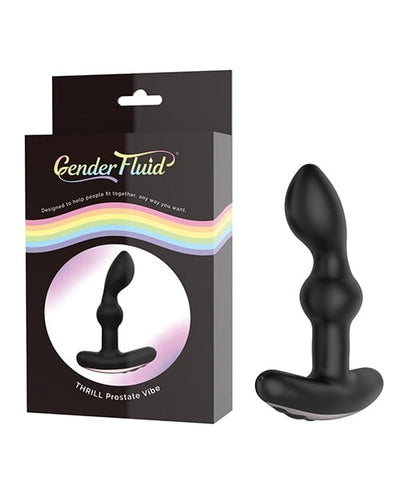
Prostate stimulators are designed for sexual stimulation. Some are manual, some vibrate, and some use curved shapes intended to contact the prostate through the rectum. That does not make them Kegel trainers or rehabilitation devices.
The distinction is important for both safety and SEO. A prostate toy can be described accurately by insertable length, diameter, curve, flared base, material and controls. It should not be described as a device that strengthens the pelvic floor unless the manufacturer specifically supports that intended use and there is appropriate evidence.
For products in that category, use our Prostate Stimulators Collection. For pelvic-floor training, follow the actual exercise or rehabilitation plan instead.
Butt plugs, anal beads, probes and vibrating anal toys are also not interchangeable with pelvic-floor trainers. Their intended purpose is sexual use, and their safety design focuses on insertable dimensions, base retention and materials rather than resistance training.
Any rectal device must have an appropriate retrieval base or design that prevents it from being drawn fully inside. But even an anal-safe product is not automatically suitable for pelvic-floor rehabilitation.
This is why “internal device” is too broad a category. Anatomy, purpose and manufacturer instructions matter more than the fact that a product can be inserted.
If a device is designed for male pelvic-floor training, the manufacturer should state that explicitly. For internal products, the insertion route, dimensions and retrieval method should be clear. For external sensors, placement instructions should explain where the electrodes or sensors go.
| Specification | What to verify | Why it matters |
|---|---|---|
| Intended anatomy | Male, anal, external or universal | Prevents unsafe substitution |
| Intended use | Feedback, stimulation, tracking, wellness | Defines what the device actually does |
| Dimensions | Insertable length and maximum width | Fit and comfort |
| Retrieval design | Flared base, handle or sensor cable as specified | Safe removal |
| Material | Exact manufacturer-listed material | Cleaning and compatibility |
| Feedback method | Pressure, EMG, motion or app score | Shows what is actually measured |
| Power | Rechargeable, battery, wired | Maintenance and setup |
| Cleaning | Water rating and care instructions | Hygiene and electronics protection |
Some devices translate sensor data into scores, streaks or game-style feedback. That can make training more engaging, but it can also create a false sense of precision. A number on a screen does not diagnose pelvic-floor weakness, overactivity, nerve dysfunction or the cause of urinary symptoms.
Cleveland Clinic emphasizes that pain, incorrect muscle recruitment and excessive tension are reasons to get professional help. NIDDK likewise notes that a healthcare professional can verify whether the correct muscles are being used.
Use consumer feedback as training information, not as a substitute for clinical assessment.
Pelvic-floor training should not create pelvic, rectal or genital pain. Cleveland Clinic states that Kegels should not hurt and recommends stopping and talking with a healthcare provider if they do. It also warns that doing too many Kegels can increase tension or worsen symptoms.
Difficulty starting urination, incomplete emptying, painful ejaculation, persistent pelvic pain or a feeling that the pelvic floor will not relax may point away from a simple strengthening plan.
In those cases, buying a stronger or more advanced device can move in the wrong direction. Pelvic-floor physical therapy may instead focus on relaxation, breathing, coordination, manual therapy or other strategies.
Men often encounter pelvic-floor training around prostate procedures. Cleveland Clinic notes that Kegels may be useful before or after prostate surgery for urinary control, but it also specifically states that Kegels should not be performed with a Foley catheter in place because they may cause bleeding or bladder spasms.
The same caution applies to devices. Post-surgical healing, catheter use, infection risk and surgeon instructions matter more than a generic product schedule. Do not insert or use a pelvic-floor device during recovery simply because it is marketed for men.
First confirm that pelvic-floor training itself is appropriate. Second, identify the problem the device is meant to solve. If technique is already clear and basic Kegels are working, a device may add very little. If muscle identification is difficult, feedback may be useful. If there is significant weakness or post-surgical rehabilitation, a clinician may recommend a more structured approach.
Then verify anatomy and intended use. Avoid products that use broad language without explaining how they work. Finally, check cleaning, charging, app compatibility and replacement parts if electronics are involved.
The best device is not the one with the most features; it is the one that solves a defined training problem safely.
This page owns the search intent “pelvic-floor devices for men: anatomy, intended use and compatibility.” The Pelvic Floor Training for Men article owns exercise technique and urinary-control context. The broader pelvic-floor device guide owns Kegel balls, cones, sensor trainers and biofeedback across product types.
Because the store does not currently have a dedicated male pelvic-floor rehabilitation collection, this page connects only to the broader Sex Toys for Men architecture and clearly distinguishes sexual products from rehabilitation devices.
Not in the same sense as vaginal Kegel balls. Men can perform Kegel exercises without equipment, and any male training device should be designed specifically for the intended anatomy and function.
No. NIDDK states that special equipment is not required for Kegel exercises. Biofeedback or electrical stimulation may be used when additional help is needed.
No. A prostate massager is a sexual stimulation product unless the manufacturer specifically identifies another intended use.
They should not be assumed to. Anal toys are designed for sexual use, not automatically for pelvic-floor rehabilitation.
Biofeedback uses sensors to show whether pelvic-floor muscles are contracting. It can help with technique when muscle identification is difficult.
Yes. Cleveland Clinic notes that overtraining can increase pelvic-floor tension or worsen symptoms.
Only according to the surgical or rehabilitation plan. Timing, catheter status and healing matter. Cleveland Clinic specifically advises against Kegels while a Foley catheter is in place.
For exercise technique, use the Pelvic Floor Training for Men guide. For the broader men’s product catalog, browse Sex Toys for Men.