Shopping cart
You have no items in your shopping cart.
Quick answer: Choosing a sex toy as a couple works best when both partners are already open to the idea, agree on what kind of experience they want, and compare a small number of relevant categories instead of shopping randomly. For a first shared toy, prioritize simple controls, manageable size, easy cleaning, clear material information, and a design that does not make either partner feel pressured to perform.
This article focuses on how couples choose and introduce a first shared-use toy. It is not the same as our communication guide, which covers how to bring up a new idea, and it is not the same as our product-comparison article, which goes deeper into specifications across couples-toy designs.
Planned Parenthood recommends open communication about likes, dislikes, boundaries, and preferences because partners cannot be expected to automatically know what the other person wants. A toy should be added because both people are interested, not because one person is trying to fix or improve the other.
Someone can be interested in looking at products without agreeing to buy or use one.
Consent should remain specific and reversible. Agreeing to shop does not mean agreeing to every product or activity discussed.
Source: Planned Parenthood: Talking to Your Partner About Sex.
Before comparing products, agree on the function you are actually looking for.
Once the intended use is clear, the product list becomes much easier to narrow.
A bullet vibrator, wearable vibrator, vibrating ring, wand, and remote-control toy are not direct substitutes.
These are usually simple, small, and easy to position or hand between partners.
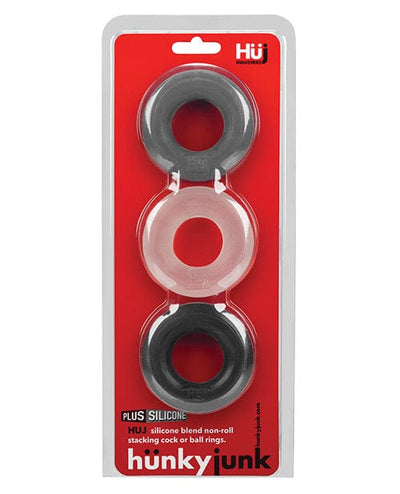
These combine a wearable ring with a small motor and should be compared by fit, flexibility, controls, and removability.
Wands provide broad external vibration and may be heavier or more powerful than compact designs.
These add control distance and technology requirements such as pairing, charging, app permissions, and connectivity.
Choosing one category prevents the shopping process from turning into an overwhelming comparison of unrelated designs.
Browse our Couples Toys Collection.
There is no universal best first toy, but lower-complexity products are often easier to learn together.
Apps, multiple motors, heating, suction, and complex remotes can be useful, but they also add setup and maintenance.
Product dimensions affect comfort and handling more directly than the number of vibration modes.
Product images rarely show true size accurately.
A shared-use toy should be easy to adjust without interrupting the experience.
If both partners are learning the product, simple controls may be more useful than a long feature list.
Remote toys can be practical for shared use, but the control system matters.
A physical remote may be simpler, while an app may offer longer-distance control or additional settings.
For app-controlled products, review account requirements, permissions, Bluetooth or internet dependence, and manufacturer privacy documentation.
For a deeper technology guide, see Remote-Control Sex Toys for Long-Distance Couples.
Planned Parenthood notes that sex toys can be used safely with partners, but shared toys can transmit infections if body fluids remain on the product.
Planned Parenthood lists 100% silicone, hard plastic, stainless steel, aluminum, and break-resistant glass as common non-porous materials.
TPE, TPR, PVC, vinyl, elastomer, jelly rubber, and silicone blends may retain microbes more easily.
Motors, seams, charging ports, removable sleeves, and water ratings also affect care.
Source: Planned Parenthood: Sex Toys.
Planned Parenthood recommends washing toys before they touch another person’s genitals.
A condom over the toy can be useful when sharing.
Do not use the same condom on a toy between partners or between anal and vaginal use.
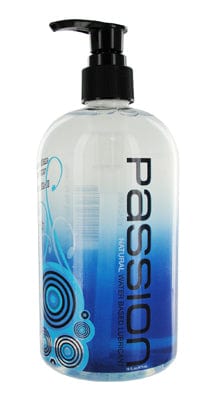
Lubricant can reduce friction and improve comfort.
Water-based formulas are broadly compatible with many toys and condoms.
Some silicone lubricants can damage some silicone toys. Follow the exact manufacturer guidance.
Do not assume one formula works with every toy.
Browse our Lubricants Collection.
The first use should be exploration, not a performance benchmark.
Increase intensity only if both partners want to.
It can be put aside at any point without meaning the purchase was a failure.
A toy cannot guarantee orgasm, better intimacy, or relationship improvement.
Planned Parenthood describes consent as specific, freely given, reversible, informed, and enthusiastic.
Each new activity still requires agreement.
Planned Parenthood advises stopping and checking in when a partner appears uncomfortable or uncertain.
Source: Planned Parenthood: Sexual Consent.
A product cannot tell you what your partner likes.
Preferences are not fixed forever.
| Type | Why couples may choose it | Main buying checks |
|---|---|---|
| Compact vibrator | Simple external shared use | Size, controls, noise, charging |
| Vibrating ring | Wearable shared-use design | Fit, flexibility, motor, removability |
| Wand | Broad external vibration | Weight, power, head size, attachments |
| Remote vibrator | Partner-controlled settings | Range, remote, pairing, charging |
| App-controlled toy | Distance control | App support, privacy, connectivity |
| Wearable vibrator | Hands-free use | Fit, stability, controls, size |
A surprise toy can create pressure if the other person never agreed to use one.
Intensity is not a quality score.
Wearable and ring-style products need appropriate sizing.
A simpler product may be easier to learn together.
Shared-use toys need clear hygiene routines.
Products can add options but cannot repair communication or trust on their own.
If one partner is hesitant, pressured, or using the purchase to avoid a more important conversation, pause the shopping process.
For guidance on bringing up a new idea without pressure, see How to Talk to Your Partner About Trying New Things.
A toy is not a substitute for medical or mental-health evaluation when symptoms are ongoing.
This article owns the intent “how to choose and introduce a first sex toy as a couple.” Our communication article covers how to start the conversation; our Partner Pleasure Guide focuses on feedback and comfort; and our separate couples product-comparison article goes deeper into comparing shared-use designs and specifications.
We separate relationship guidance from product claims. Planned Parenthood provides the foundation for communication, consent, safer sharing, cleaning, and barrier use. For shopping decisions, we focus on measurable features: category, size, fit, materials, controls, charging, water rating, cleaning, storage, and app requirements. We do not claim that any toy guarantees orgasm, intimacy, or relationship improvement.
Last updated: October 2, 2026.
There is no universal best choice. A simple compact vibrator, vibrating ring, wand, or remote toy can be easier to compare when the controls and size match both partners’ preferences.
Only if you already know they are comfortable receiving one. If the gift implies an expectation to use it, discuss the idea first.
Yes. Consent should be specific, voluntary, and ongoing.
Yes, but shared toys should be cleaned between users, and barriers such as condoms should be changed between people or body areas.
Water-based lubricant is broadly compatible with many materials, but always check the exact toy manufacturer’s instructions.
A toy may add novelty or stimulation options, but it cannot guarantee better communication, intimacy, or relationship satisfaction.
That is valid. Consent is reversible, and buying a product does not create an obligation to use it.