Shopping cart
You have no items in your shopping cart.
Search for a “butterfly vibrator” and you will quickly discover that the name is less precise than it sounds. Some products are small external wearables held against the vulva by underwear or straps. Others use an insertable section plus an external motor. Some are controlled by buttons, some by a dedicated remote, and some through a phone app. A few products marketed with “butterfly” in the name are not wearable at all.
That is why the best way to choose one is not to start with the number of vibration modes or the shape of the decorative wings. Start with the design: where the toy is meant to sit, how it stays there, what kind of stimulation it provides, and how you can control or stop it. Once those questions are clear, features such as remote range, app control, noise and charging become much easier to compare.
In current product listings, “butterfly vibrator” is usually used for a compact vibrator with a butterfly-shaped or winged external body. Many are designed for hands-free or semi-hands-free external stimulation. Some add straps or an insertable section to help hold the product in place. Others are essentially small wearable vibrators with a butterfly-shaped shell.
The important point is that butterfly vibrator is a product-family term, not a precise engineering standard. Two products with the same category name can fit and function very differently.
This also explains a common source of search confusion. “Butterfly vibrator,” “wearable vibrator,” “panty vibrator,” “remote-control vibrator” and “app-controlled vibrator” are overlapping descriptions, not synonyms. “Wearable” describes how the toy is positioned. “Remote-controlled” describes one control method. “App-controlled” describes another. A single product may be all three, but it does not have to be.
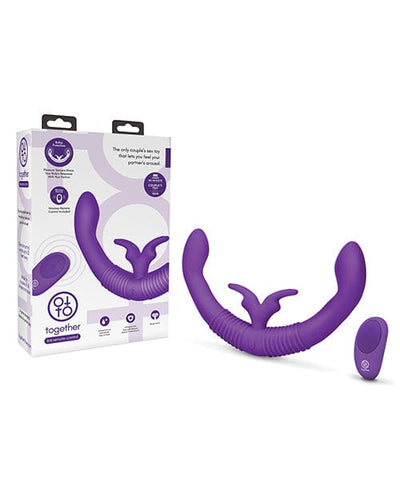
A panty vibrator is typically an external wearable held in place by underwear, a magnetic clip or a dedicated garment. A butterfly vibrator may work the same way, but some designs use straps, a harness or an insertable anchor. A wearable couples vibrator may use yet another shape intended to stay positioned during partnered use.
| Type | How it usually stays in place | Main thing to check |
|---|---|---|
| External butterfly wearable | Underwear, straps or shaped body | External contact and movement stability |
| Dual-contact butterfly | Insertable section plus external body | Internal/external alignment and dimensions |
| Panty vibrator | Underwear or magnetic clip | Pressure, clothing fit and noise |
| Wearable couples vibrator | Flexible arms or insertable support | Space, fit and position during shared use |
This is one of the most useful questions to answer before buying because the photographs often make every model look equally secure.
Some products rely on underwear to hold the motor against the body. Others use adjustable straps. Dual-contact designs may use an insertable section as part of the support system. A few combine more than one method.
There is no universally best approach. A design that stays positioned while lying down may move when sitting. A product that feels stable under snug underwear may shift under looser clothing. An insertable section may improve stability for one user and create unwanted pressure for another.
For that reason, “wearable” should not be read as “stable in every position.” It is more accurate to ask what holds this particular model in place and in which positions it was designed to be used.
This decision changes the category more than almost any other specification. External-only models avoid insertion and usually depend on underwear, straps or the shape of the shell for support. Dual-contact models may combine an insertable section with an external contact point.
If you prefer no insertion, filter for external-only designs first. If you are considering a dual-contact model, compare the actual insertable dimensions rather than assuming a compact photograph means a compact fit.
Product images are rarely useful for judging scale. Look for measurements in inches or millimeters and compare them with a product type you already know is comfortable.
The exact positioning depends on the model, so the manufacturer instructions come first. In general, an external wearable should sit where the motor can maintain the intended contact without requiring painful pressure from clothing or straps.
Before relying on a wearable design in any other situation, test it privately at home. Try the product while lying down, then sitting, and—if the design is intended for movement—standing or walking around the room. If it pinches, rotates, pulls against the skin or loses contact, that is useful fit information, not something you need to “push through.”
If straps are adjustable, set them in the position where the product will actually be used. A strap that feels comfortable while standing may feel very different when seated.
Some designs can remain comfortable during light movement; others are better suited to stationary use. The word wearable by itself does not answer this question.
The practical test is stability. Does the product stay aligned? Does body weight create pressure when seated? Does a strap or insertable section move uncomfortably when walking? Does the motor housing rub against clothing?
A product intended mainly for use in bed does not need the same retention system as a product marketed for hands-free movement. Compare the support method, not the lifestyle photography.
Retail listings often lead with ten, twelve or twenty vibration patterns, but fit determines whether those patterns reach the intended area consistently. A toy that shifts out of position can make an impressive mode list irrelevant.
Look for:
Brands do not always count modes in the same way. One may advertise ten modes by combining three steady speeds with seven pulse patterns; another may list ten distinct patterns. That makes headline mode counts difficult to compare.
A more useful product page explains which settings are steady intensities, which are patterns and how they are changed. Also pay attention to the lowest setting. More power is not automatically better if a product starts too strongly for your preference.
Terms such as “powerful,” “rumbly,” “whisper quiet” and “premium motor” are marketing descriptions unless the listing supplies something measurable or a clear comparison method.
Butterfly and wearable vibrators commonly use three control systems. Onboard buttons are the simplest and have the fewest dependencies, but they may be harder to reach once the product is positioned. A dedicated remote moves the controls away from the body without requiring a phone. App control can add more patterns, custom control or long-distance features, but it also introduces pairing, software and privacy questions.
If remote operation is a major reason you are buying the product, confirm exactly what is included. A product described as remote-capable may use a physical remote, an app or both.
Noise depends on more than the motor. The housing, intensity setting, pressure against the body and even clothing can change what you hear. A product may sound different in free air than when it is actually worn.
If a manufacturer publishes a noise measurement, check how it was measured and at what distance. If it only says “quiet” or “discreet,” treat that as a general marketing claim rather than a laboratory specification.
For privacy at home, the better questions are whether the product rattles at higher settings, whether loose components add noise and whether the controls themselves produce noticeable sounds.
Many current products combine silicone-like external surfaces with rigid plastic housings, internal electronics, straps, magnets or charging contacts. Use the manufacturer's stated material list and care instructions rather than assuming composition from photographs.
Material matters because it affects feel, cleaning and storage. Mixed-material products may have different care requirements for the soft body, charging contacts and straps.
One of the most common shopping mistakes is treating any water-related claim as permission to submerge the product. Check the exact manufacturer wording or IP rating when one is provided.
Water resistance may be enough for surface cleaning but not for immersion. Charging ports, removable controllers and magnetic contacts may have their own drying requirements.
Rechargeable models are common, but the charging system still deserves attention. Check whether the cable is proprietary, magnetic or a common connector, whether the remote uses separate batteries and whether the manufacturer publishes an approximate runtime.
Battery figures are usually estimates rather than guarantees. Intensity, age of the battery and connected features can all change real-world runtime.
Follow the instructions for the exact product. Clean only with methods compatible with the stated materials and water-resistance level. Let the product dry fully before charging or storage.
Inspect flexible sections, straps, seams, controls and charging contacts periodically. If a part is visibly damaged, loose or cracked, stop using the product until the manufacturer guidance confirms whether it can be repaired or replaced.
Store the toy clean and dry with its compatible charging components. If the surface is soft, avoid leaving it pressed against unknown plastics or sticky materials for long periods.
This category tends to make the most sense for shoppers who specifically want a compact external or dual-contact wearable, hands-free positioning, or remote control. It may be less attractive if you prefer a handheld toy you can reposition continuously, stronger pressure from a larger motor or a product with no straps, apps or pairing steps.
That distinction is important. A wearable is not an automatic upgrade from a handheld vibrator; it solves a different positioning problem.
The biggest mistake is choosing from the mode count before confirming the form factor. Other recurring mistakes include assuming every “butterfly” design is external-only, assuming “wearable” means comfortable for walking, ignoring dimensions, treating app control as synonymous with long-distance control, and assuming “water resistant” means submersible.
Another mistake is buying for a feature you probably will not use. If you only need nearby control, a simple dedicated remote may be more convenient than maintaining an app account. If you mostly use onboard buttons, paying extra for long-distance software may add complexity without adding value.
We reviewed current search results and product-category guides around the queries “butterfly vibrator,” “how to wear a butterfly vibrator,” “wearable vibrator,” “remote-control vibrator,” “app-controlled vibrator,” “butterfly vibrator fit,” “butterfly vibrator noise,” and related buying questions. We compared the recurring decision points across current retailer guides, specialist review sites and manufacturer-style documentation.
We intentionally avoid ranking unnamed products or repeating unsupported performance claims. For dimensions, materials, water resistance, battery estimates, app compatibility and control range, the current documentation for the exact model should override generalized advice.
Last reviewed: October 3, 2026.
A butterfly vibrator describes a common shape or design family. Wearable describes how the product is positioned. Many butterfly vibrators are wearable, but not every wearable vibrator is butterfly-shaped.
Depending on the model, it may use underwear, straps, a harness, an insertable section or the shape of the product itself. Check the exact support system before buying.
Some designs are intended for light movement, while others are better for stationary use. Test stability and comfort privately and follow the manufacturer's intended-use guidance.
It depends on the product and how it is used. Follow the manufacturer's guidance and choose a lubricant compatible with the stated materials if one is needed.
No. A physical remote, nearby Bluetooth app control and internet-based partner control are different systems with different range, setup and privacy considerations.
Start with external versus insertable design, dimensions, support method and controls. Those factors usually matter more than the number of vibration patterns.
A butterfly vibrator is worth considering when its wearable design solves a specific problem for you: hands-free positioning, compact external contact, dual-contact fit or remote control. The best comparison is not “which one has the most modes?” but “which design will stay where I need it, fit comfortably, give me easy control and be straightforward to clean and charge?”
Browse related models in our Remote Vibrators Collection.