Shopping cart
You have no items in your shopping cart.
Choosing an anal toy by small, medium, or large labels is unreliable. This guide explains how to read diameter, circumference, insertable length, base dimensions, and shape specifications so you can compare products accurately and prioritize safety.
Small, medium, large, beginner, and advanced are retailer descriptions, not universal measurements. One manufacturer's medium plug may have a larger maximum diameter than another manufacturer's large model. Compare the actual specifications for each product and the geometry of its usable portion. A well-written listing should disclose maximum insertable diameter, insertable length, base dimensions, material, and design. If any important measurement is missing, request it from the seller instead of estimating from a photograph.
Diameter describes the distance across a circular cross-section. Circumference is the distance around it; for a circle, circumference equals diameter multiplied by approximately 3.14. Some products have oval or irregular cross-sections, so a single diameter may not describe the entire profile. Ask whether the listed width refers to the widest insertable point or an external feature. Compare measurements in the same units and convert inches to millimeters when necessary.
For a tapered or shaped product, the narrowest point is not the maximum size. The widest insertable section may occur in the middle of a plug, near a rounded head, or along a series of beads. That maximum width can be more relevant to sizing than the tip or the advertised overall length. Do not assume a product is a smaller size simply because its tip is narrow. Read diagrams carefully and distinguish insertable geometry from the base.
Overall length may include a handle, retrieval loop, flared base, battery compartment, or external controls. Insertable length describes the portion designed for insertion, when the manufacturer provides that measurement. The two figures can differ significantly. A six-inch product may have much less usable length once its base and handle are excluded. Never treat a long overall measurement as an instruction to use the full length. Follow the intended design and manufacturer guidance.
A tapered plug, rounded beads, slim probe, and curved prostate-oriented design distribute their width differently. Two items with identical maximum diameters can have very different transitions, lengths, and neck shapes. A narrow tip does not compensate for a sudden wide section farther along. Compare the entire profile and any diagrams rather than focusing only on one measurement. Our Anal Toy Features Guide explains how taper, base, texture, and construction interact.
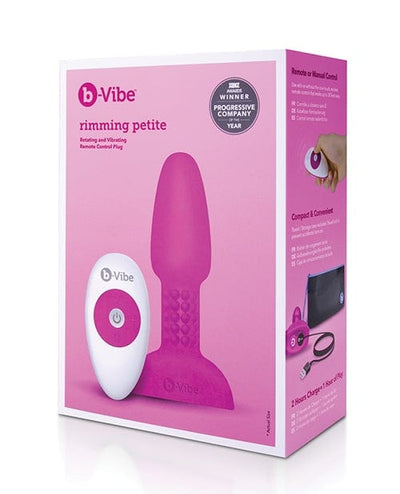
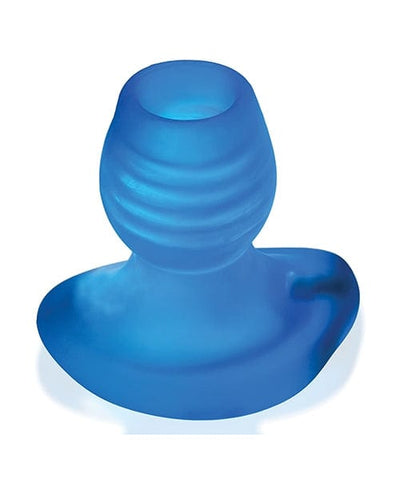
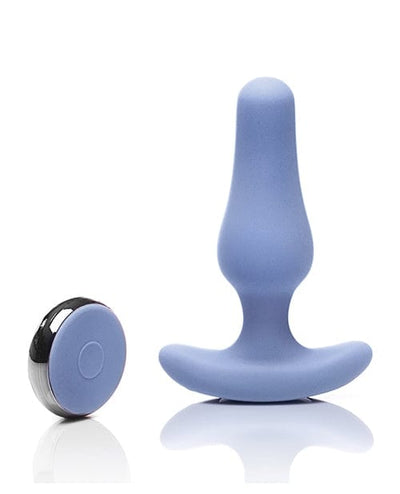
A butt plug usually includes a tapered or rounded body, a narrower neck, and a flared base intended to remain outside the body. The maximum body diameter, neck diameter, insertable length, and base shape are different specifications. Product listings may show only the widest point, which is insufficient for a complete comparison. Look for clear photographs and dimensional diagrams. The base should be designed to prevent the entire product from entering the rectum.
Bead sets may increase gradually in diameter or use beads of the same size. A listing that gives only the diameter of the largest bead does not explain the progression between them. Check bead count, individual sizes where provided, spacing, connecting material, overall usable length, and retrieval design. Avoid assuming that a larger final bead makes a set appropriate for a beginner. See our Anal Beads Guide for category-specific comparisons.
A slim probe may have a relatively small diameter but greater insertable length than a compact plug. Length alone does not determine suitability, and slender construction is not a substitute for a safe retrieval design. Check the manufacturer's intended use, maximum diameter, rigidity, curvature, and base. A design without an appropriate external stop should not be assumed safe for anal use simply because it is narrow.
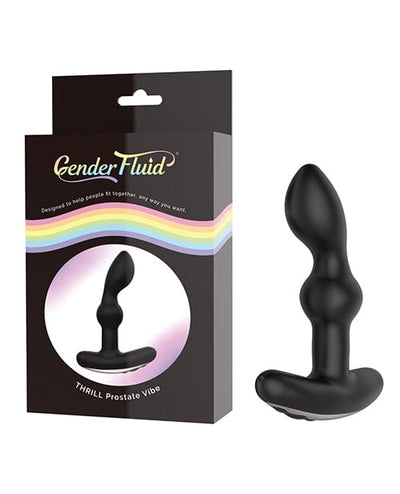
Prostate-oriented devices often use curves, offsets, or distinct contours rather than a straight cylindrical profile. Maximum width, curvature, insertable length, and base design all matter. Product names alone cannot establish whether a particular shape is suitable for an individual. Compare the maker's dimensional diagram and instructions rather than treating a curved profile as a guarantee of comfort or any medical benefit.
Flexible silicone, rigid glass, metal, and other materials do not behave the same way. A softer design may compress or bend, while rigid products retain their shape. Even within silicone, firmness varies by formulation and wall thickness. Do not assume that two items with the same diameter will feel or function identically. Consider material, texture, and surface condition together with the dimensions. Inspect rigid items carefully for chips or cracks before use.
Ribs, bumps, ridges, and decorative elements can increase the widest point beyond a product's smooth central shaft. If a listing states only nominal shaft diameter, it may omit raised details. Compare the maximum insertable width including any raised features. Textured products may also require extra attention during cleaning. Marketing terms such as ergonomic or realistic are not substitutes for measurable specifications.
One inch equals 25.4 millimeters, and one centimeter equals 10 millimeters. When comparing products, convert every measurement to a common unit. Check whether the seller rounds figures or mixes inches and centimeters across variants. If the diameter is given in inches but the circumference is given in centimeters, verify that the numbers are internally consistent. Product dimensions should come from the manufacturer whenever possible.
Use this reference when reviewing product listings.
| Specification | What it describes | Common mistake |
|---|---|---|
| Maximum insertable diameter | Widest intended insertable section | Confusing it with tip width |
| Circumference | Distance around a cross-section | Comparing it directly with diameter |
| Insertable length | Length of the intended insertable section | Using overall length instead |
| Overall length | Entire product including base or handle | Assuming all of it is insertable |
| Neck width | Narrower section on certain plug designs | Ignoring the wider body |
| Base dimensions | External stopping or retrieval feature | Ignoring retention safety |
| Bead progression | Sequence of bead diameters | Looking only at the largest bead |
The rectum can draw objects inward, so products intended for anal use should have a purpose-built flared base or appropriate retrieval feature that prevents complete insertion. The base should remain outside the body and be structurally secure. Avoid household objects or products without a suitable stop. If an item becomes retained, seek urgent medical care rather than attempting risky extraction. Base design deserves as much attention as the insertable measurements.
There is no universal starting diameter suitable for every person. Anatomical differences, comfort, experience, and health conditions vary. For someone unfamiliar with a product category, a modest, clearly documented design may be easier to assess than one labeled advanced. Do not force insertion, continue through pain, or treat larger sizes as an achievement. Stop if there is bleeding, numbness, persistent pain, or unusual symptoms, and seek medical advice when appropriate.
Adequate lubricant can reduce friction, but it does not make an unsuitable size or unsafe design acceptable. Choose a lubricant compatible with the product material and any barrier protection being used. The anal area does not produce the same natural lubrication as the vagina. Follow product instructions and stop when discomfort occurs. For formula differences, read our Anal Lubricant Buying Guide.
Look for dimensions in consistent units, a labeled diagram, the actual contact material, a clear base photograph, intended-use information, and care instructions. Be cautious when a listing uses only labels such as mini, XXL, or beginner-friendly. Customer photographs may distort scale, and hand-held comparison shots are not precise measurements. Ask for the manufacturer's maximum insertable diameter and insertable length if they are absent.
Create a simple comparison of maximum diameter, insertable length, base geometry, material rigidity, texture, and cleaning method. If two products have the same width but different taper, they are not identical. If one product has a rigid body and the other a flexible body, material becomes a meaningful differentiator. Compare intended-use guidance and safety features before considering color, marketing claims, or temporary discounts.
Common errors include using the tip width as the product's size, comparing circumference with diameter, treating overall length as insertable length, ignoring a wide textured section, overlooking the flared base, and assuming the same size label means the same dimensions across brands. Another mistake is buying by product photography alone. Precise measurements and the maker's instructions should guide the decision.
No. Diameter measures across a circular section; circumference measures around it. For a circle, circumference is approximately 3.14 times the diameter.
The overall measurement can include a base, handle, or controls that are not designed for insertion.
No. Check the maximum insertable diameter and the full profile.
Not necessarily. Material rigidity, texture, and shape can change how the design behaves.
Choose a purpose-built product with a secure flared base or appropriate retrieval feature intended to prevent full insertion.
No universal chart fits everyone. Compare actual dimensions, product instructions, and individual comfort without forcing progression.
Ask the seller or manufacturer for the relevant dimension before buying.
Stop using it. Seek professional medical care for persistent pain, bleeding, or other concerning symptoms.
Confirm the maximum insertable diameter, usable length, full shape, material, base design, and manufacturer care instructions. Compare numbers in consistent units and avoid relying on vague size labels. Browse Butt Plugs, Anal Beads, and Anal Probes to compare products by category. For a broader introduction, read Anal Toys for Beginners.